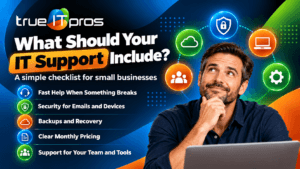
Meta Description: Build a cybersecurity-first culture with simple habits, employee training, safer tools, and stronger protection for your business.
Introduction
A cybersecurity-first culture means your team thinks about safety before they click, share, download, or approve access.
For small businesses in Atlanta, this matters more than ever. Cyber threats can hit law firms, real estate offices, accounting teams, nonprofits, construction companies, veterinary clinics, and many other local businesses.
Good security is not only about software. It is about people, habits, leadership, training, and daily decisions.
What Is a Cybersecurity-First Culture?
A cybersecurity-first culture is a workplace mindset where every employee helps protect business data, systems, and customers.
It means security is not treated as an IT-only job. Everyone plays a role.
Your team learns how to spot risks, report problems, and follow safe steps before damage happens.
Why Does Cybersecurity Culture Matter?
Cybersecurity culture matters because many cyberattacks start with human mistakes.
A team member may click a fake email, use a weak password, share a file with the wrong person, or approve a suspicious login request.
A strong culture helps prevent these mistakes before they become expensive problems.
- Fewer phishing clicks
- Better password habits
- Faster reporting of suspicious activity
- Safer handling of customer data
- Stronger compliance support
How Do You Start Building a Cybersecurity-First Culture?
You start by making cybersecurity simple, visible, and part of daily work.
Your team should know what to do, what to avoid, and who to contact when something feels wrong.
The goal is not to scare employees. The goal is to help them feel ready.
Step 1: Make Cybersecurity a Leadership Priority
Cybersecurity works best when leaders support it clearly and often.
Owners, managers, and directors should talk about security as part of business health.
When leaders take it seriously, employees are more likely to follow.
- Mention security in team meetings
- Support training time
- Follow the same rules as everyone else
- Avoid blaming employees for honest reports
Step 2: Train Employees in Simple Cybersecurity Habits
Employee cybersecurity training should teach clear actions that people can use every day.
Training should be short, regular, and easy to understand.
One long training session per year is not enough.
Training should cover:
- How to spot phishing emails
- How to create strong passwords
- Why multi-factor authentication matters
- How to report suspicious messages
- How to handle sensitive files
- How to avoid unsafe downloads
Step 3: Create a No-Blame Reporting Process
A no-blame reporting process helps employees report threats fast without fear.
This is important because fast reporting can stop a small issue from becoming a major incident.
If someone clicks a suspicious link, they should report it right away.
- Create one clear reporting contact
- Tell employees what details to share
- Thank people for reporting risks
- Fix the issue before placing blame
What Cybersecurity Habits Should Every Business Teach?
Every business should teach habits that protect email, passwords, devices, files, and customer data.
These habits should be easy to repeat and simple to remember.
Use Strong Passwords and Multi-Factor Authentication
Strong passwords and multi-factor authentication help block unauthorized access.
Employees should avoid reused passwords and simple passwords.
They should also use multi-factor authentication for email, cloud apps, banking tools, and business platforms.
Think Before Clicking Emails and Links
Phishing emails try to trick employees into clicking, paying, logging in, or sharing data.
Your team should pause before clicking links or opening attachments.
They should check the sender, message tone, link address, and request type.
Protect Devices at Work and on the Go
Device security keeps company data safer on laptops, phones, tablets, and desktops.
Employees should lock screens, update systems, avoid unknown Wi-Fi, and report lost devices fast.
This is especially important for remote workers and teams that travel across Georgia.
Limit Access to Business Data
Access control means employees only get the data and tools they need to do their jobs.
This reduces damage if an account is hacked or an employee leaves the company.
Review permissions often in Microsoft 365, Google Workspace, file-sharing tools, and business apps.
How Can Managed IT Support a Cybersecurity-First Culture?
Managed IT support helps businesses build safer systems, stronger policies, and better daily habits.
A trusted IT partner can help your team stay protected without making technology feel confusing.
This is helpful for small businesses that do not have a full internal IT department.
Managed IT Can Help With:
- Security training
- Password policies
- Multi-factor authentication setup
- Device monitoring
- Software updates
- Email protection
- Data backup planning
- Incident response steps
How Often Should Cybersecurity Training Happen?
Cybersecurity training should happen regularly, not just once a year.
Short monthly reminders can work better than long annual sessions.
Your team needs repeated practice because cyber threats change often.
A Simple Training Schedule
- Monthly: short security tip or reminder
- Quarterly: phishing awareness training
- Twice a year: access and password review
- Once a year: full security policy review
- Anytime: training after a new threat or incident
How Can Atlanta Businesses Make Cybersecurity Easy?
Businesses can make cybersecurity easier by creating clear rules, simple checklists, and repeatable steps.
Employees should not have to guess what to do.
Simple systems help people follow security rules even on busy days.
Use Simple Cybersecurity Checklists
A checklist helps employees follow the same safe steps every time.
- Before sending a file, check the recipient
- Before paying an invoice, verify the request
- Before clicking a link, inspect the sender
- Before using a new app, ask IT for approval
- Before sharing access, confirm permission levels
Keep Security Policies Short and Clear
A cybersecurity policy should be easy for employees to read and follow.
Avoid long documents that no one understands.
Use simple language, short rules, and examples that match real work situations.
What Mistakes Hurt Cybersecurity Culture?
The biggest mistakes are making cybersecurity confusing, blaming employees, and treating security as a one-time task.
A strong culture needs trust, repetition, and clear support.
Avoid These Common Mistakes
- Only training once per year
- Using technical words employees do not understand
- Blaming employees for reporting mistakes
- Ignoring old user accounts
- Letting employees share passwords
- Allowing too many people to access sensitive data
- Not testing backups or response plans
How Do You Measure Cybersecurity Culture?
You measure cybersecurity culture by tracking employee actions, security habits, and response speed.
The goal is not perfection. The goal is steady improvement.
Useful Metrics to Track
- Phishing test results
- Number of suspicious emails reported
- Password reset patterns
- Multi-factor authentication usage
- Security training completion
- Time to report a possible incident
- Number of unused accounts removed
Why Is Cybersecurity Important for Small Businesses in Atlanta?
Cybersecurity is important for Atlanta small businesses because local companies often store sensitive customer, employee, financial, and operational data.
A cyber incident can cause downtime, lost trust, legal problems, and financial damage.
Small businesses may also have fewer internal resources to recover quickly.
Industries That Need Strong Cybersecurity Habits
- Law firms
- Real estate companies
- Financial services firms
- Accounting offices
- Architecture and planning firms
- Management consulting firms
- Nonprofit organizations
- Veterinary clinics
- Manufacturing companies
- Construction companies
- Aviation businesses
- Automotive businesses
- Insurance agencies
- Transportation companies
Cybersecurity-First Culture Checklist
A cybersecurity-first checklist helps your business turn security ideas into daily action.
- Leadership supports security
- Employees receive regular training
- Multi-factor authentication is enabled
- Passwords are strong and not reused
- Employees know how to report threats
- Access permissions are reviewed often
- Devices stay updated and protected
- Backups are tested
- Security rules are easy to understand
- Employees feel safe asking questions
FAQ
What is a cybersecurity-first culture?
A cybersecurity-first culture is when everyone in a business helps protect data, systems, and customers. It makes security part of daily work, not just an IT task.
How can small businesses improve cybersecurity culture?
Small businesses can improve cybersecurity culture with regular training, clear rules, strong passwords, multi-factor authentication, and safe reporting processes.
Why do employees need cybersecurity training?
Employees need cybersecurity training because many attacks start with simple mistakes. Training helps them spot phishing, avoid risky clicks, and report threats faster.
How often should cybersecurity training happen?
Cybersecurity training should happen throughout the year. Short monthly tips, quarterly phishing training, and yearly policy reviews can help keep employees alert.
Can managed IT services help with cybersecurity culture?
Yes. Managed IT services can help set up security tools, train employees, monitor systems, manage access, and create safer business processes.
Build a Safer Business One Habit at a Time
A cybersecurity-first culture helps your business reduce risk, protect customers, and respond faster when something looks wrong.
Start with simple steps. Train your team. Make reporting easy. Use strong access controls. Review security often.
To learn more about how trueITpros can help your business with building a cybersecurity-first culture, contact us at www.trueitpros.com/contact
Related Content
- HTTPS Awareness – Protect Your Team from Online Threats
- HTTPS Awareness – Protect Your Team from Online Threats – TrueITPros
- Secure Your Microsoft 365 with Multi-Factor Authentication
- Secure Your Microsoft 365 with Multi-Factor Authentication – TrueITPros
- How To Enable Unified Audit Log in Office 365
- How To Enable Unified Audit Log in Office 365 – TrueITPros
- What is a Managed IT Service Provider (MSP) & How Can It Help Your Business?